From: http://evirtuoso.informe.com/forum/evirtuoso-music-theory-essentials-book-f4/applying-scales-t8.html
Was wondering about Eb being used for solo-ing over a C7 chord, and here the answer is, you can use a pentatonic scale with flat 3rd and 7th.
Scales are often played against
chord progressions, and the chords can help decide which scales to play.
Beginner students often become confused determining which scale to play
with a particular chord because there are so many possibilities when
deciding which scale to play with which chord. The following are a few
possible scale and chord combinations to try (refer to the chord’s
chapter for unfamiliar chords).
The major (ionian) scale works
great with the major chord family like Cmaj6, Cmaj7, Cmaj9, and Cmaj13.
The fourth step note in a major scale will often sound dissonant when
played against a major chord because it will clash with the major
chord’s third step note.
The dorian mode is used with the minor chord family and also try dorian modes with dominant seventh, sharp nine chords (C7#9).
The
phrygian mode works great in minor keys with a v7-VImaj7 chord
progression in it (Em7-Fmaj7). In major keys, that would be a
iii7-IVmaj7 chord progression. Try playing this scale against minor
chords (Cm), minor sevenths (Cm7), minor seven-flat ninths (Cm7b9),
minor eleventh-flat ninths (Cm11b9), and minor eleventh-flat ninth-flat
thirteenth (Cm11b9b13) chords.
The lydian mode is used with major
family chords such as major chords (Cmaj), major sevenths (Cmaj7),
major seventh-sharp eleventh (Cmaj7#11), major ninths (Cmaj9), and major
thirteenth-sharp elevenths (Cmaj13#11). With the major seven chords,
the first step note will tend to resolve down to the seventh step note.
The
mixolydian mode is used with the dominant family chords like dominant
seventh (C7), dominant ninth (C9), dominant eleventh (C11), and dominant
thirteenth (C13) chords. Try using the suspended second and suspended
fourth alterations with this scale as well (C7Sus4, C7Sus2, C9Sus4, and
C13Sus4).
The minor (aeolian) scale is used with the minor family
chords. This scale works with minors (Cm), minor sevenths (Cm7), minor
ninths (Cm9), minor elevenths (Cm11), and minor eleventh-flat
thirteenths (Cm11b13). It is also used in minor keys with a minor
seven-flat five chord (Cm7b5) in the chord progression.
The
locrian mode can also be played with the minor seven-flat five chord. In
addition to the diminished chord (Cdim), the locrian mode is used with
minor seven-flat five-flat ninth (Cm7b5b9), minor eleventh-flat
five-flat ninth (Cm11b5b9), and minor eleventh-flat five-flat ninth-flat
thirteenth (Cm11b5b9b13) chords.
Pentatonic scales are very
popular and work in many situations. The major pentatonic scale can be
played over major chords, and the minor pentatonic scale can be played
over minor chords. The minor pentatonic scale is also commonly used with
the relative major chords, like the A minor pentatonic scale over the C
major chord. Try playing major pentatonic scales built on the major
scale’s first, second, and fifth steps over major seventh chords. One
example, using the C major scale (C, D, E, F, G, A, B), is playing the
C, D, and G major pentatonic scales over a C major seventh chord. For
dominant seventh chords, play pentatonic scales based on the major
scales first, flat third, and flat seventh steps. Another example is
playing C, Eb, and Bb pentatonic scales over a C7 chord. Over altered
dominant chords, play a minor pentatonic scale with the root note based
on the chord’s flat third, fourth, and flat seventh step note. A third
example is playing Eb, F, and Bb minor pentatonic scales over the
altered dominant C7#5#9 chord.
The blues scale is often played
with the dominant (C7, C7b9, C7#9, C9, C13) and minor (Cm, Cm7, Cm7b5)
family chords, and is commonly played throughout the entire blues
progression matching the scale’s root note with the song’s key
signature. For example, play a C blues scale over a C7-F7-G7 chord
progression. Also, practice using relative minor blues scales, such as
playing the C# minor blues scale in the key of E. By comparing blues
scales with pentatonic scales, their many similarities allow them to be
great substitutes. Try substituting the minor blues scale with the minor
pentatonic scale.
The harmonic minor scale is played with minor
chords that add a sharped seventh step like minor-major seventh
(Cm/maj7) chords, minor ninth-major seventh (Cm9/maj7) chords, minor
eleventh-major seventh (Cm11/maj7) chords, and minor-major seventh-flat
thirteenth (Cm/maj7b13) chords. Also, try the harmonic minor scale with
the fourth step dominant seventh-sharp ninth (F7#9) chord, or the fifth
step dominant seventh (G7), dominant seventh-flat ninth (G7b9), and
dominant seventh-flat thirteenth (G7b13) chords.
The jazz/melodic
minor scale, just like the harmonic minor, can also use minor-major
seventh (Cm/maj7), minor ninth-major seventh (Cm9/maj7), and minor
eleventh-major seventh (Cm11/maj7) chords. The minor thirteenth-major
seventh (Cm13/maj7) chord can also be used. For dominant chords, try
playing the jazz/melodic minor’s second step as a dominant
seventh-suspended fourth (D7Sus4) or a dominant seventh-suspended
fourth-flat ninth (D7Sus4b9) chord. On the fourth step note, play a
dominant seventh chord (F7) or a dominant seventh-sharp eleventh (F7#11)
chord. On the fifth step, play a dominant seventh (G7), dominant
seventh-suspended fourth (G7Sus4), or dominant seventh-flat thirteenth
(G7b13) chord.
The lydian-augmented scale is used with major
chords that have a raised fifth step, like the major seven-sharp five
(Cmaj7#5), the major seven-sharp eleven-sharp five (Cmaj7#11#5), and the
major thirteen-sharp five (Cmaj13#5) chord.
The Lydian b7 scale
is used with major and dominant chords that have flat fifth, flat ninth,
and flat thirteenth chord alterations. A few examples are major-flat
five (Cmajb5), dominant seventh-flat five (C7b5), dominant seventh-flat
five-flat ninth (C7b5b9), and dominant seventh-flat five-flat thirteenth
(C7b5b13) chords.
The locrian #2 scale is played with minor
seventh-flat five (half-diminished) chords like Cm7b5. It can also be
used with minor ninth-flat five (Cmin9b5) and minor eleventh-flat five
(Cmin11b5). This scale works better than the locrian scale when the
ninth step is unaltered.
The super locrian scale is used with
altered fifth and ninth dominant chords. A few examples are dominant
seventh-sharp five-sharp nine (C7#5#9) and dominant seventh-sharp
five-flat nine (C7#5b9) chords. Because this scale flats every step but
the root (1, b2, b3, b4, b5, b6, b7), flatting the root note creates a
major scale.
The whole tone scale works with dominant chords that
have a raised and lowered fifth step such as C7#5, C7b5, C9, C9#5,
C9b5, and C7#5#11.
The whole step-half step and half step-whole
step scales are used with the dominant seventh chord and can add flat
ninth (b9), sharp ninth (#9), sharp eleventh (#11), or thirteenth (13)
chord extensions such as C7, C7b9, C7#9, C7#11, or C13. Diminished
seventh chords like Cdim7 can be used as well. Remember, these two
scales are the same, just starting on a different note.
The
augmented scale can be used with augmented chords (major chords that
have a sharped fifth step). This scale can also be used when the
augmented chord is extended with a major seventh interval to create the
major seventh-sharp five chord like Cmaj7#5.
Continue to practice
and experiment with the many vast possible combinations of scales with
chords. If a teacher or a friend is not available to practice with, try
to record a few chord progressions and then practice solo ideas on top
of them. Listen to each scale against the chord progression to find
which scale fits best for that song. Also, look at some favorite songs
and begin to analyze the scales used in those songs, and how those
scales sound against the chord progressions. This process will become
easier with time, and also help define a unique composing style that
helps separate one musician from another.
Thursday, August 30, 2012

Monday, August 27, 2012
Library thoughts: Kontakt Factory vs VSL SE
Let's face it. VSL's instruments aren't cheap. And for us hobbyists, it begs the question, will I actually make full use of the full blown VI?
At the moment, the answer for me is easy: No.
But yet I lust for more VIs (lol gimme more harps).
And looking back over the short piece I finished today - I realized something about the articulations.
A quick browse shows that the Brass and Wind instruments in the Kontakt 5 Factory Library come with:
- 3 types of sustain
- Fp
- Sfz
- Staccato
Comparatively, VSL SE instruments come with
- legato
- sustained
- sfz
- staccato
So, the base SE instruments basically miss out 2 types of sustains and fp.
The SE also has the Plus package which gives us these articulations:
- Portato
- Fp
- Half and whole note trills
- Repetition performance for legato and staccato
- Fast repetiions at 3 speeds (?)
Hmmm.....
At the moment, the answer for me is easy: No.
But yet I lust for more VIs (lol gimme more harps).
And looking back over the short piece I finished today - I realized something about the articulations.
A quick browse shows that the Brass and Wind instruments in the Kontakt 5 Factory Library come with:
- 3 types of sustain
- Fp
- Sfz
- Staccato
Comparatively, VSL SE instruments come with
- legato
- sustained
- sfz
- staccato
So, the base SE instruments basically miss out 2 types of sustains and fp.
The SE also has the Plus package which gives us these articulations:
- Portato
- Fp
- Half and whole note trills
- Repetition performance for legato and staccato
- Fast repetiions at 3 speeds (?)
Hmmm.....
Elfen Lied | Lilium | Music Box | Orchestral Piano Cover
Another little thing I worked on, sort of a compo to get everyone to compose a piano rendition of this particular anime song and see how everyone does it.
This is the first time I actually ran out of cpu power, and forced me to bounce tracks to disk. Mmm... I still had relatively lots of ram available though, 3+gb out of 8gb. Bouncing to disk ain't no big a deal.
Piano: SampleTekk PMI Old Lady
Strings: VSL Chamber Strings
Horns & Percussion: Kontakt 5 Factory Library
I'd like to add that I spent *alot* of time humanizing the strings, like easily 3, maybe 4 hours, only to have them knocked into the background lol.
A fair amount of time was combining the music box version with the harmony of the original lilium piece (thankfully both were in f# minor), most of it appeared to work when hearing it in Finale, but did not work once sequenced, and had to find alternative chords to make it work. I hope it does!
EDIT: There is actually a fair bit of white noise in the intro as I boosted it up with a gain plug - I actually didn't hear any noise on my speakers or akg 240MK2 headphones. A forum member mentioned the noise and I checked again, not hearing anything.... pulling out my new shure iems.... damn, it's there! Guess I'm putting my iems into my mixing chain as well.
EDIT2: AIEEE! I can hear white noise in my recorded CP33 tracks!
Sunday, August 26, 2012
Orchestral Template Musings
One more time! Lol.
My latest sample acquisition is VSL's Chamber Strings I, the full thing, standard and extended. I put out an ad on Vi-Control and as luck would have it, a composer was selling his copy off, so I managed to snag it way below retail. Woo! That's one thing to love about vsl - you can legally purchase used libraries, unlike say East West, where that's not allowed. And I really wish I could get rid of my EWQL Symphonic Orchestra as I just don't use it at all - much prefer the workflow with vsl and kontakt.
Alright, so let's do the rundown again. I need to keep reminding myself that *I have kontakt and the built-in library* - I keep going off about "I have no winds, I have no brass", yadayada, but as one of my friends pointed out, I have kontakt and there's a friggin' orchestra in there, as well as choirs, band instruments, ethnic instruments, sampled synths and more.
Strings:
VSL Chamber Strings + Solo Strings - DONE. For now.
Winds, Brass, Percussion: Konkakt 5's native library.
Truthfully, down the road I want to go down the vsl route for winds brass and percussion as well, though there are oher considerations e.g. Wallander Instruments for Brass.
Preciously, that was a no brainer as I loved the sound, and being a modelled instrument it is light on the disk, ram and cpu. However, now that I've been using a bit more vsl, I really enjoy the workflow, and apart from loading times, vsl's stuff seems very memory and cpu efficient.
But when it comes to VSL, the issue is PRICE, as well as what to buy. For brass there's 3 options, Dimension Brass, as well as Brass I and II. I don't know my brass needs at the moment, so it is difficult to say I'll need which lib. Now that I think about it, I actually should not be buying libraries because I want to "Fill the gap with VSL" - I do have the Kontakt library and it does have alot of the stuff I can use to experiment with, and if doesn't work I can get vsl.
Well no, actually I know I will get vsl, BUT, using the kontakt libraries first will give me more insight on what my needs are. E.g. I really like the legato performances in the string libs from vsl so far; I'm sure the brass and winds will have that kind of performance as well. AFAIK the kontakt libs don't have legato, at least not on the articulation page, so I hope I'm wrong and it is there just something I need to tweak.
Ok, so that's it for me then, I'll give the kontakt built-in libraries a go, but if I ever come across a good offer for vsl... heheheheh
Subnote: After much fuddling about with the Kontakt library, I can safely say I am not all all a fan of the woodwinds in there (I think they are the horizon series vsl instruments, not the current day instruments? I could be wrong) - no legato is a big killer for winds as I dabble in several types of flutes (I forsee a tenor recorder in the near future) and having an attack at every note for solo flute just blows it. Faking the legato seems to work though. Brass, I don't know, no legato but sounds ok, percussion sounds great! Strings seem to be pretty good even without legato, but this was with just a very simple midi phrase for testing.
My latest sample acquisition is VSL's Chamber Strings I, the full thing, standard and extended. I put out an ad on Vi-Control and as luck would have it, a composer was selling his copy off, so I managed to snag it way below retail. Woo! That's one thing to love about vsl - you can legally purchase used libraries, unlike say East West, where that's not allowed. And I really wish I could get rid of my EWQL Symphonic Orchestra as I just don't use it at all - much prefer the workflow with vsl and kontakt.
Alright, so let's do the rundown again. I need to keep reminding myself that *I have kontakt and the built-in library* - I keep going off about "I have no winds, I have no brass", yadayada, but as one of my friends pointed out, I have kontakt and there's a friggin' orchestra in there, as well as choirs, band instruments, ethnic instruments, sampled synths and more.
Strings:
VSL Chamber Strings + Solo Strings - DONE. For now.
Winds, Brass, Percussion: Konkakt 5's native library.
Truthfully, down the road I want to go down the vsl route for winds brass and percussion as well, though there are oher considerations e.g. Wallander Instruments for Brass.
Preciously, that was a no brainer as I loved the sound, and being a modelled instrument it is light on the disk, ram and cpu. However, now that I've been using a bit more vsl, I really enjoy the workflow, and apart from loading times, vsl's stuff seems very memory and cpu efficient.
But when it comes to VSL, the issue is PRICE, as well as what to buy. For brass there's 3 options, Dimension Brass, as well as Brass I and II. I don't know my brass needs at the moment, so it is difficult to say I'll need which lib. Now that I think about it, I actually should not be buying libraries because I want to "Fill the gap with VSL" - I do have the Kontakt library and it does have alot of the stuff I can use to experiment with, and if doesn't work I can get vsl.
Well no, actually I know I will get vsl, BUT, using the kontakt libraries first will give me more insight on what my needs are. E.g. I really like the legato performances in the string libs from vsl so far; I'm sure the brass and winds will have that kind of performance as well. AFAIK the kontakt libs don't have legato, at least not on the articulation page, so I hope I'm wrong and it is there just something I need to tweak.
Ok, so that's it for me then, I'll give the kontakt built-in libraries a go, but if I ever come across a good offer for vsl... heheheheh
Subnote: After much fuddling about with the Kontakt library, I can safely say I am not all all a fan of the woodwinds in there (I think they are the horizon series vsl instruments, not the current day instruments? I could be wrong) - no legato is a big killer for winds as I dabble in several types of flutes (I forsee a tenor recorder in the near future) and having an attack at every note for solo flute just blows it. Faking the legato seems to work though. Brass, I don't know, no legato but sounds ok, percussion sounds great! Strings seem to be pretty good even without legato, but this was with just a very simple midi phrase for testing.
Saturday, August 25, 2012
Bow techniques for the Violin
Having no idea what "spiccato" is - bouncing the bow off the string sure, but I found this lovely set of vides off youtube that gives examples of what the various bowings are.
Another video covering some other bowings.
Another video covering some other bowings.
Rise up and Roar!

Eheheheh my string library finally arrived and I quickly composed this upbeat piece just to test it out :3
I'm not sure of the mixing, I may have pushed the instruments a bit too far back into the soundstage. Wish I had speakers to really figure stuff like that out but oh well.
Saturday, August 18, 2012
Grabbing Rocks

Wednesday, August 15, 2012
A new chapter begins

Bought "Orchestration" by Cecil Forsyth on a whim. Well, kind of on a whim - I caught sight of a review that this was not your regular orchestration textbook, but has a bit of English humour in it. And it does! So, I'll learn and have a laugh too, win!
Also, as it was used (my 2nd edition is from 1966?!), cost only a few quid off amazon.
Also finished off my first two studies of Bach chorales. They are a work of art in their own right, seriously.
Tuesday, August 14, 2012
Another book complete!

Wednesday, August 1, 2012
Dearly Beloved

This exercise above is my attempt to do 4 part harmony with strong vertical harmony. I think I will change my focus from doing the orchestral transcriptions to analyzing these bach chorales.
Sunday, July 29, 2012
Neverending Journey

Memories atop Point 56
Memories atop Point 56 by Gallen Wolf
Sat down and sequenced this piece for string quartet - before I go further I have to say I have no idea what a string quartet is - apart from what I read off Wikipedia :P
For this piece, I used two violins, with a viola and cello. For most of the song, it is 3 part harmony. The 2nd violin was used mainly to add texture by playing different articulations.
This is also my first outing with VSL Solo Strings I, as well as the new sampler player. The new player is really nice, it loads samples faster, provides visual feedback for alot of options like playing range, keyswitches. There is also a zebra2-ish kind of modular section where you can set controllers to modulate a specific control. Oh, there is now an algo style reverb built in as well.
EDIT: After much listening and comparing, I think my strings are much to up-close, a bit more reverb and eq to move them further back would sound preferable, I think.
Sat down and sequenced this piece for string quartet - before I go further I have to say I have no idea what a string quartet is - apart from what I read off Wikipedia :P
For this piece, I used two violins, with a viola and cello. For most of the song, it is 3 part harmony. The 2nd violin was used mainly to add texture by playing different articulations.
This is also my first outing with VSL Solo Strings I, as well as the new sampler player. The new player is really nice, it loads samples faster, provides visual feedback for alot of options like playing range, keyswitches. There is also a zebra2-ish kind of modular section where you can set controllers to modulate a specific control. Oh, there is now an algo style reverb built in as well.
EDIT: After much listening and comparing, I think my strings are much to up-close, a bit more reverb and eq to move them further back would sound preferable, I think.
Tuesday, July 24, 2012
Dubstep!
Melodic Dubstep : Hikaru No Ookami by Gallen Wolf
Totally forgot to post this track! As a monthly challenge, me and another friend are choosing genres we've never worked on and composing for them.
I laid down the challenge of Dubstep, mainly because I really dislike dubstep.
And what better way to learn more about something you don't like than to research about it? Turns out that what I didn't like, is the modern, US Style dubstep, aka "Brostep".
However, the roots of dubstep are pretty awesome, and I actually enjoyed alot of the music I listened too, older stuff is pretty darned amazing (check out this blog post)
After much research, one particular sub genre of dubstep I really liked is Melodic Dubstep. One artist in particular, Blackmill, stood out from the crowd. I felt that apart from maintaining the roots of dubstep, the melody layered gives it alot of character and stands it out.
And here above is my attempt at Melodic Dubstep. Enjoy!
Totally forgot to post this track! As a monthly challenge, me and another friend are choosing genres we've never worked on and composing for them.
I laid down the challenge of Dubstep, mainly because I really dislike dubstep.
And what better way to learn more about something you don't like than to research about it? Turns out that what I didn't like, is the modern, US Style dubstep, aka "Brostep".
However, the roots of dubstep are pretty awesome, and I actually enjoyed alot of the music I listened too, older stuff is pretty darned amazing (check out this blog post)
After much research, one particular sub genre of dubstep I really liked is Melodic Dubstep. One artist in particular, Blackmill, stood out from the crowd. I felt that apart from maintaining the roots of dubstep, the melody layered gives it alot of character and stands it out.
And here above is my attempt at Melodic Dubstep. Enjoy!
Sunday, July 22, 2012
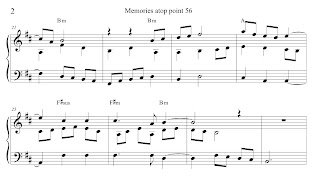
Another compo: Memories at Point 56
Totally random name. Spent a fair bit of time on this piece, tweaking after the fact (something I was told to do) - will probably tweak more tomorrow night before I submit it for my class.



Saturday, July 14, 2012
Nothing like a grand
A real grand piano that is. Another piano class today. Just love the feel and response of the real thing *squeee*
Thursday, July 12, 2012
Kontakt 5 in the house
Another sampler to learn, yay >.> But on the bright side, I now have access to alot more libraries. The existing libraries I do actually own also seem to work better on Kontakt. For examples, two of my SampleTekk pianos, PMI Old Lady and Rain Piano. The former, with the EXS24's patch had the occasionally release samples play incorrectly, and rain piano just didn't feel right on when being played.
With Kontakt now, both play great!
The downside I see is CPU cost. Kontakt appears to be *really* Cpu heavy - perhaps I need to tweak some settings. Old Lady was getting crackles when I was putting down my usual test tune, and I'd checked to ensure there were enough voices to support playing with the pedal down. Logic's CPU meter was deep in the read, even with higher buffers.
Also checked out a few of the kontakt factory libs - went straight for the flute, sadly, there does not seem to be an option for legato transitions. The world instrument flutes though, appear to have legato. I wonder if they are sampled legato or similar to what GPO uses for legato transitions. Checking the samples revealed little apart from the world flutes having 4 velocity layers per key.
Guess I'll be on a free Kontakt lib hunt this weekend, lots of free stuff from Embertone, Spitfire Audio etc. to check out.
With Kontakt now, both play great!
The downside I see is CPU cost. Kontakt appears to be *really* Cpu heavy - perhaps I need to tweak some settings. Old Lady was getting crackles when I was putting down my usual test tune, and I'd checked to ensure there were enough voices to support playing with the pedal down. Logic's CPU meter was deep in the read, even with higher buffers.
Also checked out a few of the kontakt factory libs - went straight for the flute, sadly, there does not seem to be an option for legato transitions. The world instrument flutes though, appear to have legato. I wonder if they are sampled legato or similar to what GPO uses for legato transitions. Checking the samples revealed little apart from the world flutes having 4 velocity layers per key.
Guess I'll be on a free Kontakt lib hunt this weekend, lots of free stuff from Embertone, Spitfire Audio etc. to check out.
Sunday, July 8, 2012
Orchestral Template Musings (AGAIN?!)
I've got sample libraries on the brain, what can I say. Some people are hooked on crack. Me, sample libraries. I'm like a pokemon trainer, I want to collect 'em all.
Well Berlin Woodwinds have been released recently, and whilst it is one amazing library in terms of sound and features, the price is simply out of the question for my needs.
Let's re-look at the template. As I've got Kontakt 5 on the way, and there is whole orchestral section that could be used instead of all my yammering here. As before, slash-thru text means I own that library.
Strings: LASS,VSL Solo Strings, EWQL Symphonic Orchestra
Winds: VSL or Wallander
Brass: Wallander
Drums:Drums Of War, Addictive Drums
Choir: SoundIron Mars/Venus Choirs
There are a few other bits and pieces that I should consider, stuff like percussion - celestas, cowbells, marimbas, as well as harps (omg harps, I love harps :3), typewriters and more.
Well Berlin Woodwinds have been released recently, and whilst it is one amazing library in terms of sound and features, the price is simply out of the question for my needs.
Let's re-look at the template. As I've got Kontakt 5 on the way, and there is whole orchestral section that could be used instead of all my yammering here. As before, slash-thru text means I own that library.
Strings: LASS,
Winds: VSL or Wallander
Brass: Wallander
Drums:
Choir: SoundIron Mars/Venus Choirs
There are a few other bits and pieces that I should consider, stuff like percussion - celestas, cowbells, marimbas, as well as harps (omg harps, I love harps :3), typewriters and more.


Music Log : June 2012 : Don't Look Back
Finally got around to recording this piece :) Was supposed to be recorded earlier this month on a real steinway grand during a recital, but I had to fall ill >.>
I'm also using some outboard piano samples, specifically, the SampleTekk PMI Old Lady samples. The CP33 only has 3 samples per key, and the Old Lady's got supposedly 10 samples per key. So factor in the sustain samples (another 10) and release samples, waaay more dynamic range!
Next week, my copy of Kontakt 5 should arrive, and I think the Kontakt version should have additional functionality like resonance (saw some convolution impulse responses in the samples)
In other news, I'm still chugging along with lots of things. I'm transcribing a piece of VG music to do a cover - could download the midi straight from the usual midi websites but it's a ear training thing for my saxophone.
Still doing score reductions on Adagio for Strings
I have homework (more piano compositions) to finish up before my next composition class (Tuesday! Aieee!)
And also completing the dubstep comp I'm having with a friend :)
That's apart from the rest of the non-musical stuff I'm doing :P Ah, lack of a life :P
Street Pianos!
Was walking on my way home after purchasing some groceries and hear some plonking noises in Soho Square. And to my glee, there was a Street Piano there! I'd seen these before around St Pauls and the Millenium Bridge but back in the day I had no idea how to play a piano.
 Gave this beautiful upright a whirl. Unlike a grand piano, this little beauty had a tone that has a very unique character. I really enjoyed playing on it. My right leg was also shaking like mad, must be performance anxiety XD
Due to the rainy weather we've been having I actually didn't bother seeking out the pianos this year as I thought they'd not put pianos out. The raincover is an excellent way to keep things dry. Well, dry-er anyways.
Hope this piano gets a good lease of life as a street piano. I played one of my compositions on it, I'll record it at home on my DP and put it up soon.

Due to the rainy weather we've been having I actually didn't bother seeking out the pianos this year as I thought they'd not put pianos out. The raincover is an excellent way to keep things dry. Well, dry-er anyways.
Hope this piano gets a good lease of life as a street piano. I played one of my compositions on it, I'll record it at home on my DP and put it up soon.
Subscribe to:
Posts (Atom)